Every trader must select the appropriate Forex broker. The risks are as great as the opportunities. Making it through forex trading successfully requires choosing a broker that shares your trading style and financial objectives. This post outlines key criteria for selecting a reputable Forex broker and highlights warning signs to help you avoid potential issues. Additionally, being aware of these crucial elements will guarantee that you make a well-informed and calculated decision.
The Activities of Forex Brokers
Between individual traders and the larger currency markets, forex brokers act as a middleman. By providing trading platforms where currencies are bought and sold, they make it easier for institutional and retail clients to access the foreign exchange market. A closer look at their primary roles is provided below:
1. Market Access: The financial and technological framework that links traders to international forex markets is supplied by brokers. This includes advanced analytical tools and trading platforms that can manage real-time trading.
2. Leverage: By providing leverage, traders can open positions that are far larger than their actual capital. For example, a trader can control $100,000 in the market with just $1,000 if the leverage ratio is 100:1. Leverage can boost profits, but it also dramatically raises risk.
3. Management of Liquidity: Brokers make sure that traders have enough liquidity to buy and sell currencies. They accomplish this by acting as market makers themselves or by forwarding deals to other financial organizations.
4. Education and Resources: To assist traders in comprehending Forex markets and formulating trading plans, a number of firms offer instructional materials. These could consist of interactive courses, articles, and webinars.
5. Customer Service: In a market that is open around the clock, having dependable customer service is essential. Technical and trade support are examples of support services that are offered via phone, email, and live chat.
Ten Things to Consider While Selecting a Forex Broker
Achieving success in the market requires selecting the appropriate Forex broker. The broker serves as the entry point to the global currency market, and making the incorrect decision can be expensive. These ten crucial elements should be taken into account when choosing a Forex broker.
1. Adherence to Regulations
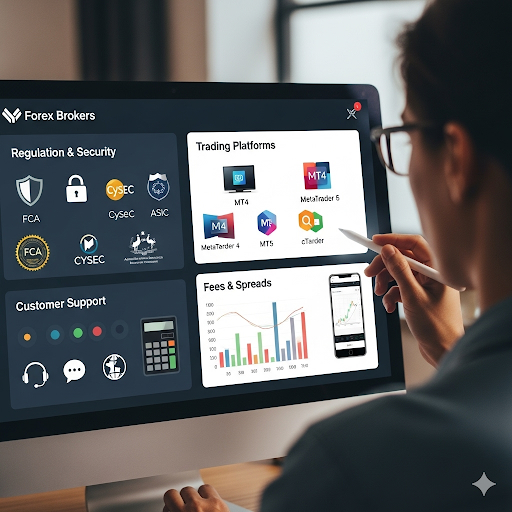
Above all, ensure that the broker is licensed and governed by a reputable organization, such as the UK's Financial Conduct Authority (FCA), the National Futures Association (NFA), or the U.S. Commodity Futures Trading Commission (CFTC). Regulation adds a degree of protection to financial activities and helps shield dealers from dishonest tactics.
2. Security of Accounts
Examine the safeguards the broker has put in place to keep customer accounts safe. This covers data encryption as well as their handling and archiving of financial and personal data. High-quality security features are used by trustworthy brokers to stop hacking and data theft.
3. Transaction Expenses
There are expenses associated with each trade, which may take the form of fees, spreads, or both. Examine the transaction costs offered by various brokers and think about how they will impact your overall trading success. While some brokers demand larger commissions, others provide tighter spreads.
4. Procedures for Deposits and Withdrawals
You may easily deposit money and withdraw your profits with a trustworthy broker. They shouldn't make it difficult for you to get your money back. The procedures must to be simple, free of extra costs or hold-ups.
5. Platform for Trading
Since the trading platform serves as your entryway to the markets, it must be stable, easy to use, and fully furnished with tools like news feeds, technical analysis tools, real-time charts, and even instructional materials. Any proprietary platform, such as MetaTrader 4 or MetaTrader 5, should fit your trading requirements and preferences.
6. Speed of Execution
The broker needs to be able to execute orders at the best prices because the Forex market changes swiftly. Verify the broker's reputation for having less slippage and whether they offer market execution or quick execution.
7. Client Support
Strong customer support should be accessible at all times because Forex trading takes place around the clock. Before committing, make sure the broker's customer service is courteous, knowledgeable, and responsive.
8. Margin and Leverage
You can manage big deals with comparatively little capital by using leverage. Recognize the margin requirements and the leverage alternatives available to the broker. It's crucial to use leverage carefully because it can both boost profits and decrease losses.
9. Available Currency Pairs
The majority of brokers offer the major currency pairs, but not all of them provide a large selection of pairs that include exotics and minors. You may require access to more varied pairs or other financial instruments like stocks, commodities, or options, depending on your trading approach.
10. Reviews and Reputation
Lastly, read other traders' reviews and comments. You may learn a lot about what to anticipate from a broker's standing in the business. Websites, discussion boards, and other social media sites might offer information on the broker's dependability and general effectiveness.